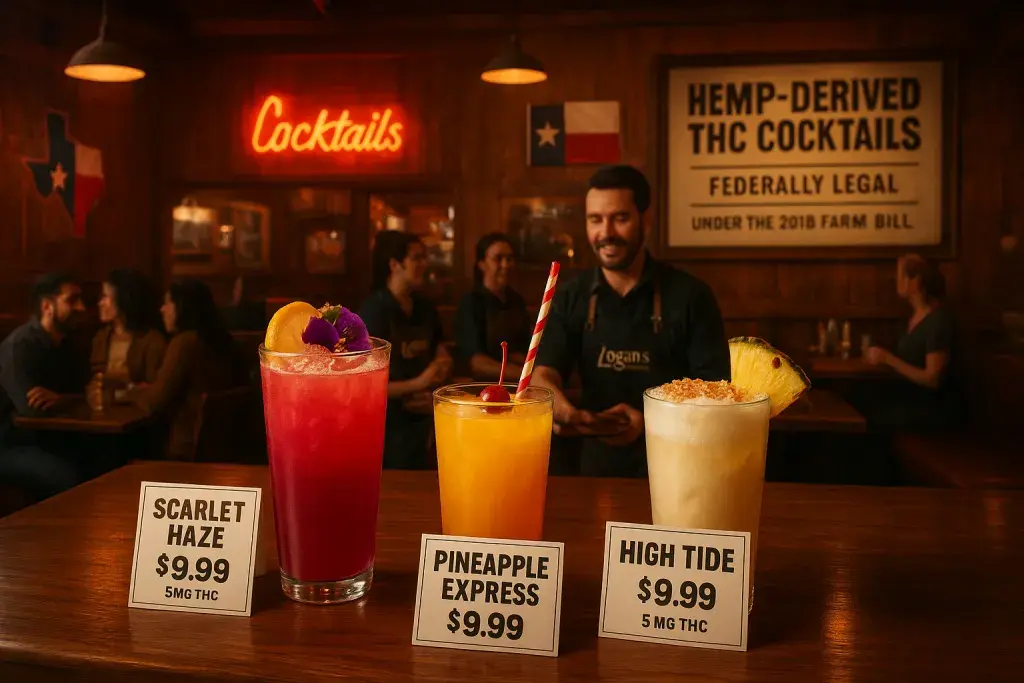
Logan's Roadhouse is adding hemp-derived THC beverages to its bar menu at participating Texas locations, making the casual dining chain one of the more prominent restaurant brands to formally embed low-dose cannabis drinks into a full-service dining context. The three cocktails - each dosed at 5 milligrams of THC and priced at $9.99 - go live June 8, 2026, with an introductory tasting flight event before settling into permanent menu rotation. This isn't a pop-up stunt. Logan's is treating these drinks like a bar SKU, which says something about where the hemp-derived beverage category now sits in mainstream food service.
The mechanics matter here. The drinks are made with a cannabis-infused spirit using a hemp-derived ingredient, which places them squarely in the federally legal hemp corridor opened by the 2018 Farm Bill rather than in the licensed adult-use cannabis channel. That distinction is why a Texas steakhouse chain - operating in a state with no adult-use cannabis program - can put THC on the menu at all. For cannabis operators in licensed markets watching this space, the contrast is pointed: a hemp-derived 5 mg drink can move through conventional food service distribution and land on a casual dining table in Texas, while a licensed dispensary in a regulated state like Arizona navigates a far denser compliance stack. Operators who rely on cannabis dispensary software arizona know firsthand how seed-to-sale tracking, COA documentation, and point-of-sale compliance requirements separate the licensed cannabis channel from the largely unregulated hemp-derived beverage market that restaurants like Logan's are now entering.
The three beverages - Scarlet Haze (prickly pear, lemon, lime), Pineapple Express (pineapple, orange juice, grenadine), and High Tide (pineapple, coconut) - are positioned as alcohol substitutes, not additions. Logan's has built a hard operational guardrail into the rollout: THC cocktails cannot be ordered alongside alcoholic beverages, and the per-guest limit is three drinks. That's a responsible consumption framework that mirrors what many licensed dispensaries use in cannabis lounge environments, and it reflects a broader industry push toward low-dose, meal-adjacent social consumption. Whether that guardrail is enforceable at scale across a busy roadhouse dining room on a Friday night is a fair question, and one the brand will presumably answer as it evaluates the Texas pilot.
What the Hemp Channel Offers - and What It Doesn't Require
The Logan's rollout illustrates the structural advantage hemp-derived THC beverages hold over their licensed-cannabis counterparts: no dispensary license, no state cannabis excise tax, no METRC integration, no compliant packaging mandate under a cannabis regulatory framework, and no restriction to purpose-built retail environments. Food service operators can add these products through existing beverage distribution relationships, train bar staff once, and price competitively at $9.99 - a price point that would be difficult to hit in a licensed dispensary after state excise taxes and compliance overhead are factored in.
That's not a criticism of the licensed channel. It's a structural reality that cannabis operators, investors, and policymakers are increasingly forced to reckon with. The hemp-derived THC beverage segment is growing fast precisely because it bypasses the compliance costs and retail restrictions that define adult-use licensing. For licensed operators, the competitive implication is real: a consumer who discovers low-dose THC beverages at their local Logan's Roadhouse may not feel a pressing reason to visit a licensed dispensary for the same effect. Brand education, staff knowledge, and the verified lab-testing standards that licensed retailers can credibly offer become differentiating arguments - but only if operators lean into them.
Compliance Gaps the Restaurant Industry Is Still Working Through
Here's the catch. The hemp-derived THC beverage market operates in a regulatory gray zone that the FDA has not fully resolved. Unlike licensed cannabis products in adult-use states - which carry state-mandated Certificates of Analysis, tested potency disclosures, and child-resistant compliant packaging - hemp-derived THC beverages face a patchwork of state-level rules and limited federal oversight. Logan's has implemented its own guardrails (age verification, per-guest limits, no concurrent alcohol service), but those are brand policies, not regulatory requirements backed by a state cannabis control authority.
For food service operators entering this space, the compliance exposure is real. Staff training on age verification, consumption limits, and how to respond if a guest appears impaired carries genuine liability weight - the same liability framework any licensed alcohol retailer operates under, but without the decades of established regulatory infrastructure that alcohol service training provides. Restaurant operators who treat THC beverages as just another beverage SKU without investing in that training layer are taking on risk they may not have fully priced in.
What the Broader Market Is Telling B2B Operators
The Logan's announcement is a data point in a larger shift. THC-infused beverages have drawn serious investment from both legacy cannabis companies and conventional beverage brands, driven by consumer demand for functional, low-intoxicant social drinks. The $9.99 price point Logan's is using is roughly competitive with a premium cocktail in a casual dining setting, which means the category is no longer asking consumers to pay a novelty premium. That's a maturation signal.
For licensed cannabis retailers, the strategic read is this: the hemp-derived channel is pulling volume from a consumer segment that was never going to walk into a dispensary in the first place - and it's also educating new consumers about low-dose THC as a category. Whether that ultimately expands the licensed market's consumer base or cannibalizes it depends heavily on how states regulate hemp-derived THC beverages going forward. Several states have already moved to bring hemp-derived cannabinoid products under cannabis regulatory frameworks; others have not. Operators, brands, and investors watching the Texas pilot should watch those regulatory conversations just as closely as the consumer response.