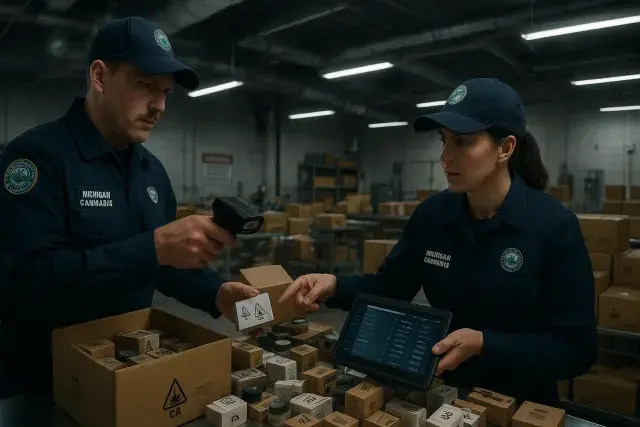
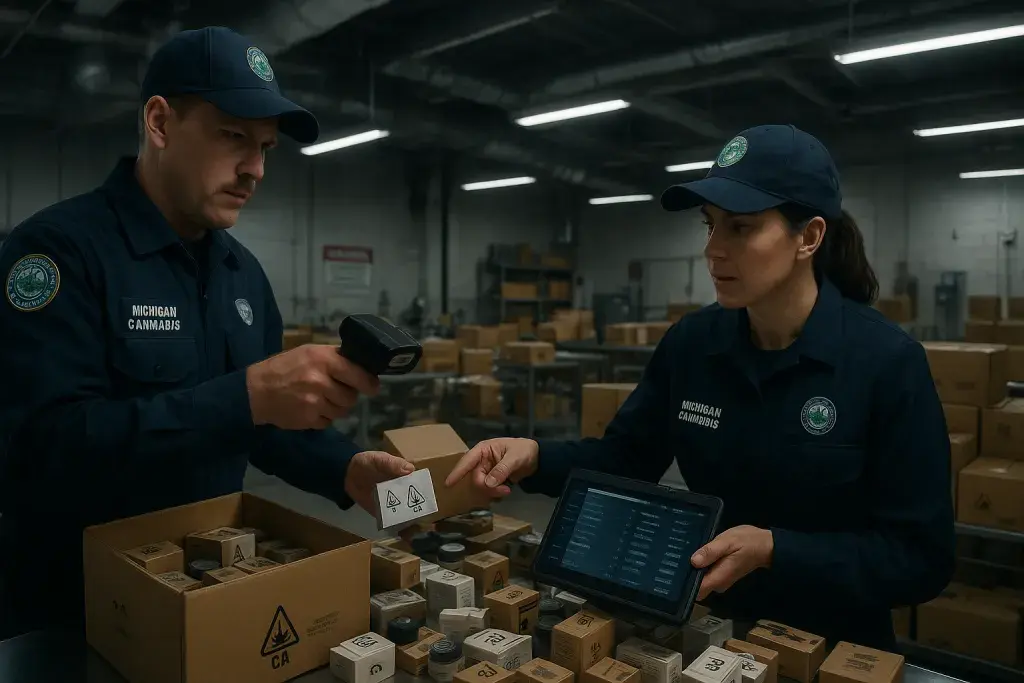
A Michigan cannabis processor is facing potential license suspension or revocation after state inspectors discovered more than 12,000 individual cannabis products at its Harrison Township facility without proper Metrc tags or identifying information - including products packaged for California's market. The Michigan Cannabis Regulatory Agency filed the formal complaint against VJAS 1 following an inspection that raised serious questions about inventory origin, chain of custody, and whether the facility was operating well outside the boundaries of its Michigan license.
Seed-to-sale tracking systems like Metrc exist precisely to prevent this kind of scenario. Every licensed cannabis business in Michigan is required to tag and log products within the state's Metrc system - from cultivation or processing through wholesale transfer and retail sale. When 12,000-plus units sit in a licensed facility with no tags, no transfer records, and no explanation from the employees on-site, that isn't a paperwork gap. That's a wholesale breakdown of the compliance infrastructure the entire regulated market depends on. It's worth drawing a comparison here: operators running tighter compliance programs in other regulated states - whether working with cannabis pos software nevada or purpose-built seed-to-sale integrations elsewhere - treat Metrc tagging as a first-line operational control, not an afterthought.
What makes the VJAS 1 case particularly difficult to explain away is the presence of products in California-specific packaging - clearly marked with "CA" and California-required warning language. That's not an administrative error. Products don't end up in California packaging inside a Michigan processing facility by accident. Regulators and prosecutors treat that kind of physical evidence as meaningful. The CRA also found that some of the tagged products present at the facility were supposed to be physically located at other licensed cannabis businesses entirely - which suggests potential cross-contamination of inventory records, possible diversion, or some combination of both.
What Metrc Non-Compliance Actually Signals
Metrc tags function as the chain-of-custody record for every unit moving through a licensed supply chain. Each tag ties a product to a specific batch, a specific licensee, and a specific location. When investigators cross-reference tag data and find that products physically present at one facility are recorded as being elsewhere in the system, it points to one of a few possibilities: products were moved without proper transfer manifests, tags were reused or misapplied, or inventory from outside the regulated system entered the facility and was never logged at all. None of those scenarios are minor compliance deviations.
For processors specifically, the stakes are high. A processing license is an intermediate step in the supply chain - material comes in from cultivators, gets processed into finished products, and moves out to distributors or retailers. Every handoff is supposed to be tracked. When a processor accumulates thousands of untagged units and employees on-site can't account for them, that suggests the tracking discipline broke down at multiple points, not just once.
The Broader Risk for Licensed Operators
Cases like this carry implications beyond the single license at issue. State regulators rely on Metrc data integrity to enforce excise tax collection, verify that licensed businesses aren't absorbing illicit product, and protect consumers from goods that haven't gone through Michigan's required testing and labeling process. An untagged product has no verified COA. It hasn't been confirmed to meet Michigan's potency, contaminant, or packaging standards. From a consumer safety standpoint, that matters - even if it's rarely the part of enforcement actions that gets the most attention.
For other licensed operators watching this case, the message is straightforward: inventory reconciliation isn't optional, and "we don't know how those got here" is not a defensible compliance posture. Multi-location operators in particular should be running regular internal audits that cross-reference physical inventory against Metrc records, flagging discrepancies before a state inspector does. A surprise inspection that turns up unexplained product doesn't give a licensee time to reconstruct records or offer context.
VJAS 1 now faces fines along with potential suspension, revocation, restriction, or refusal to renew its license - a range of outcomes that reflects how seriously Michigan's CRA is treating the findings. Whether the eventual penalty lands at the lower end of that range or the higher end will depend on what investigators determine about the source of those products and the operator's level of culpability. Either way, the facility's path back to full standing - if there is one - runs directly through demonstrating that its compliance systems have been rebuilt from the ground up.