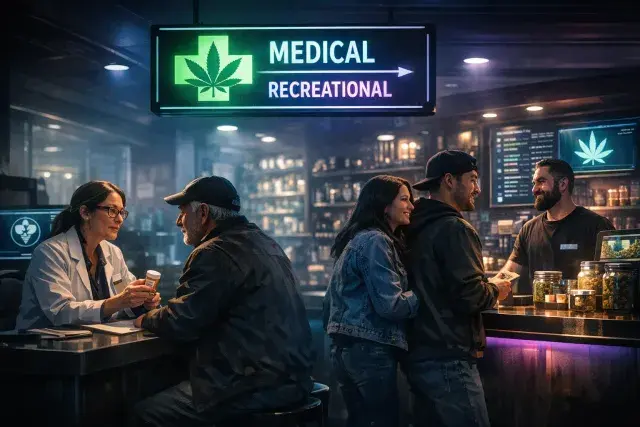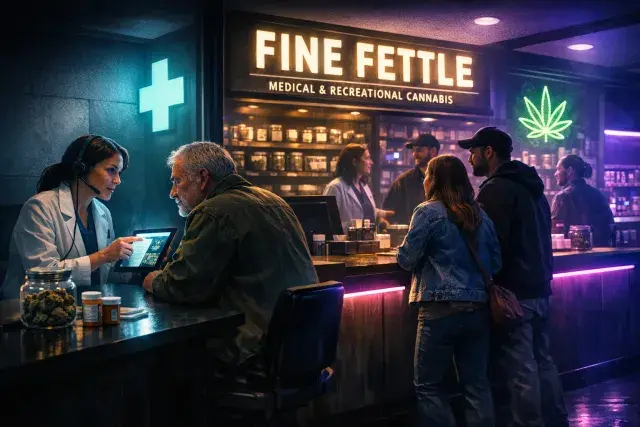

When Nevada opened adult-use cannabis sales on July 1, 2017, the first customers through dispensary doors in Reno weren't the demographic many operators had anticipated. They were, in many cases, older adults - people who had waited decades for a legal, regulated point of purchase to exist. That first wave of customers told the industry something operators are still absorbing: the adult-use consumer base is far broader, and far more experienced, than early retail models assumed.
The Customer the Industry Didn't Fully Plan For
Early dispensary buildouts - floor layouts, staff training scripts, marketing assumptions - were often designed around a younger adult-use customer. The budroom aesthetic, the menu complexity, the emphasis on vape hardware and concentrate SKUs: these reflected a particular cultural image of cannabis consumption. What Nevada's midnight openings made visible was a different kind of demand.
Older adults, particularly those who had consumed cannabis prior to prohibition's harshest enforcement era, didn't need an education on the difference between indica and sativa. They needed a safe, dignified, compliant retail environment - one where product labeling made sense, where staff weren't condescending, and where the transaction itself felt normal. Not transgressive. Normal.
That's a real operational distinction. A budtender trained to explain cannabis to a first-time adult-use customer is doing something quite different from serving a consumer who can recite the menu from memory before walking in the door. Dispensaries that recognized this early - and adjusted their staff training accordingly - tended to build stronger repeat-customer relationships with this cohort.
What the Regulatory Shift Actually Changed at Store Level
Nevada's 2017 transition to adult-use wasn't just a policy moment. It was an operational event. Dispensaries already operating under medical licensing faced rapid changes: updated seed-to-sale tracking requirements, revised point-of-sale protocols, new ID verification obligations for adult-use customers, and an excise tax structure layered on top of existing sales tax obligations. Compliance costs went up before revenue did.
The ID check at the door - the kind of routine intake that might feel procedural to a first-time visitor - is, operationally, one of the higher-stakes moments in a dispensary transaction. Age verification errors carry license-level consequences. Training front-of-house staff on compliant check-in procedures, maintaining accurate logs, and handling edge cases (expired IDs, out-of-state licenses, medical card crossover) isn't glamorous work. But it's the work that keeps a license intact.
Here's the catch: adult-use legalization brought volume that many operators hadn't stress-tested their systems for. Long lines on opening night aren't just a PR moment - they're a live test of POS throughput, inventory reconciliation speed, and staff-to-customer ratios. Operators who had built their compliance infrastructure around quieter medical sales volumes found the seams quickly.
Stigma, Equity, and the Business of Normalization
The social symbolism of adult-use legalization is genuine, but it lands unevenly. For consumers who faced little real legal risk in the prohibition era - those for whom the worst probable consequence was social judgment, not incarceration - the dispensary door opening was, essentially, a convenience upgrade. For communities historically targeted by drug enforcement, the same door opening arrived alongside a licensing and capital barrier that made ownership by those most affected structurally difficult.
That gap between normalization at the consumer level and equity at the business-ownership level is one the industry has not resolved. Social equity licensing programs exist in varying forms across legal states, but implementation has been inconsistent - delayed license processing, underfunded technical assistance, and real estate barriers have limited their practical impact in many markets. Operators and investors entering new legal states should understand that equity program requirements aren't peripheral compliance items; in some jurisdictions, they carry conditions that affect license approval, renewal, and transfer.
To put it plainly: a dispensary that treats social equity provisions as a checkbox rather than a structural commitment tends to find itself exposed when regulatory scrutiny increases - and it always increases eventually.
What Durable Adult-Use Retail Actually Looks Like
The dispensaries that have performed consistently since states like Nevada, Colorado, and California moved to adult-use aren't necessarily the flashiest ones. They're the ones that built for repeat customers across age and experience ranges - reliable inventory, clear compliant packaging, staff who can calibrate their approach to the person in front of them, and POS systems that don't collapse under Saturday afternoon volume.
Product mix matters here. A menu that spans flower, edibles with clearly labeled dosage information, and vape cartridges in trackable batches - all with accessible COAs and accurate potency labeling - serves both the curious newcomer and the consumer who hasn't needed an explanation since 1987. These aren't competing customer types. They share a floor.
The larger point is this: adult-use legalization doesn't just expand the customer pool. It changes who the dispensary is actually for. Operators who internalized that early built better businesses. The ones who didn't are still catching up.