
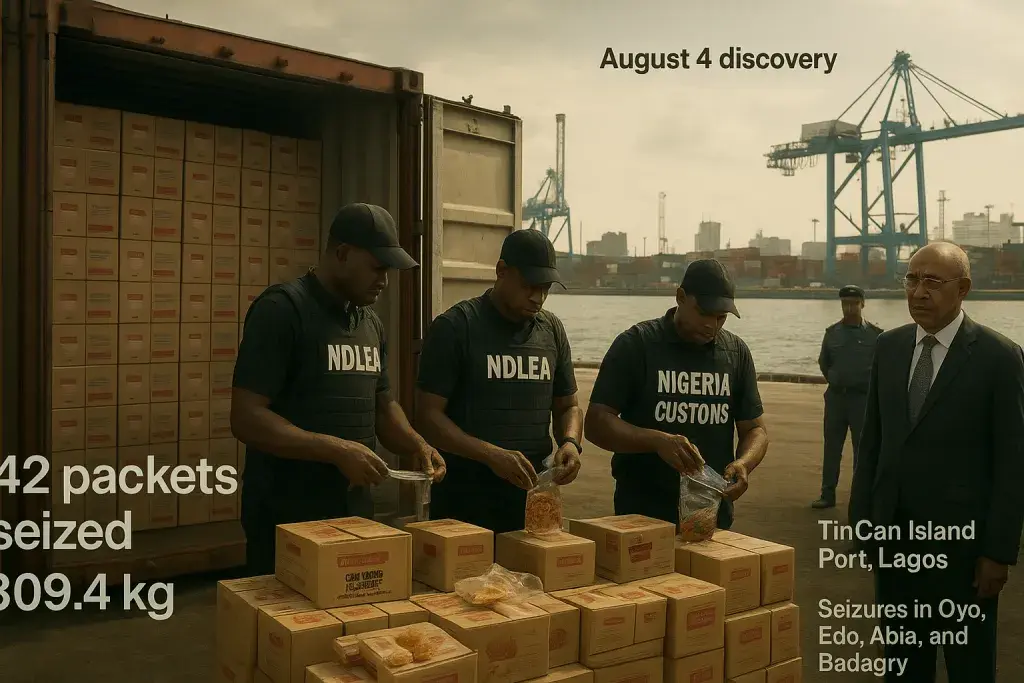
Nigerian counter-narcotics officers seized 442 packets of cannabis-infused cookies and gummies, totaling 309.4 kilogrammes, hidden inside a 40-foot shipping container at the TinCan Island Port Complex in Lagos. The discovery, made August 4 during a joint examination with the Nigeria Customs Service and other security agencies, points to a persistent problem for regulators worldwide: infused edibles travel easily, look ordinary, and are hard to distinguish from legitimate confectionery once they're out of original packaging.
That's the operational headache underneath this story. Cannabis-infused products, by design, resemble everyday snack goods, which is precisely why regulated markets lean so heavily on compliant packaging, batch-level labeling, and traceability systems. In jurisdictions with legal adult-use or medical programs, every gummy or cookie is supposed to be tracked from cultivation through manufacturing to final sale, with a certificate of analysis confirming potency and screening for contaminants. Platforms built for that purpose, such as Massachusetts seed-to-sale dispensary software, exist to keep that chain of custody intact so a product's origin, dosage, and testing history are never in question. Nigeria has no such legal framework for cannabis retail, which is exactly why a shipment like this ends up in a shipping manifest instead of a compliance log.
Why Edibles Are a Recurring Target
Infused cookies and gummies pose a distinct enforcement challenge compared to raw plant material or resin. Skunk and jumbo bags of dried cannabis are visually and olfactorily obvious to trained officers; a carton labeled as snack food is not. That mismatch between appearance and content is a known vulnerability across global drug enforcement, and it's one reason customs agencies increasingly rely on joint inspection protocols rather than routine document review alone. The NDLEA statement notes the TinCan seizure came from a coordinated examination, not a tip-driven raid, which suggests procedural screening - not intelligence alone - caught the shipment.
For legal markets, the contrast is instructive. Licensed manufacturers face strict rules on packaging that must be child-resistant, clearly labeled with THC content per serving, and free of imagery that could appeal to minors. Those requirements exist precisely because infused products can pass as ordinary food. A single mislabeled batch, even in a fully licensed market, can trigger a recall, regulatory penalties, or loss of license - the stakes are different from illicit trafficking, but the underlying safety logic is the same.
A Broader Enforcement Pattern
The TinCan seizure was one of several actions the NDLEA logged between August 3 and 8. Operatives recovered 731.03kg of illicit drugs from a warehouse in Oyo State, 604.5kg of skunk in Edo State, 7kg of skunk in Abia State, and 88.5kg of skunk from a wanted suspect in Lagos after a three-month search. Taken together, these figures describe a supply network moving product through both formal port infrastructure and informal storage sites - a pattern regulators and legitimate operators alike should note, since illicit trade routes often shadow the same logistics corridors used by licensed commerce.
- 442 packets of infused cookies and gummies (309.4kg) seized at TinCan Island Port, Lagos
- 731.03kg of illicit drugs recovered from a warehouse raid in Oyo State
- 604.5kg of skunk seized in Edo State with military support
- 88.5kg of skunk recovered from a suspect arrested after a three-month manhunt in Badagry
NDLEA Chairman Brig. Gen. Mohamed Buba Marwa (retd.) commended the commands involved and directed personnel to maintain what the agency describes as a balanced approach - enforcement paired with other measures addressing drug demand. For operators in regulated cannabis markets elsewhere, the episode is a reminder that infused products carry compliance obligations well beyond the retail counter, from manufacturing oversight to cross-border shipping controls, and that lapses anywhere in that chain create risk for legitimate businesses trying to distinguish themselves from illicit trade.