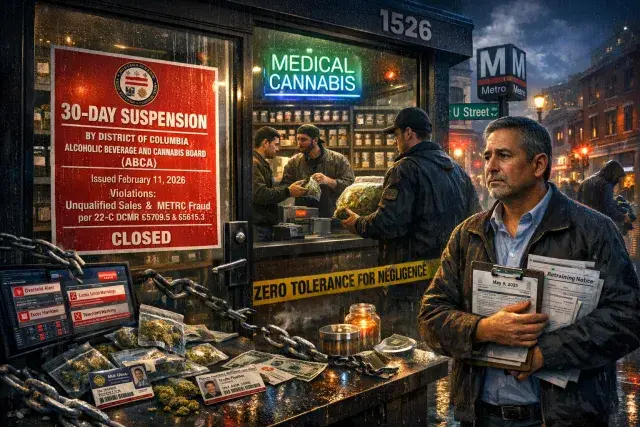
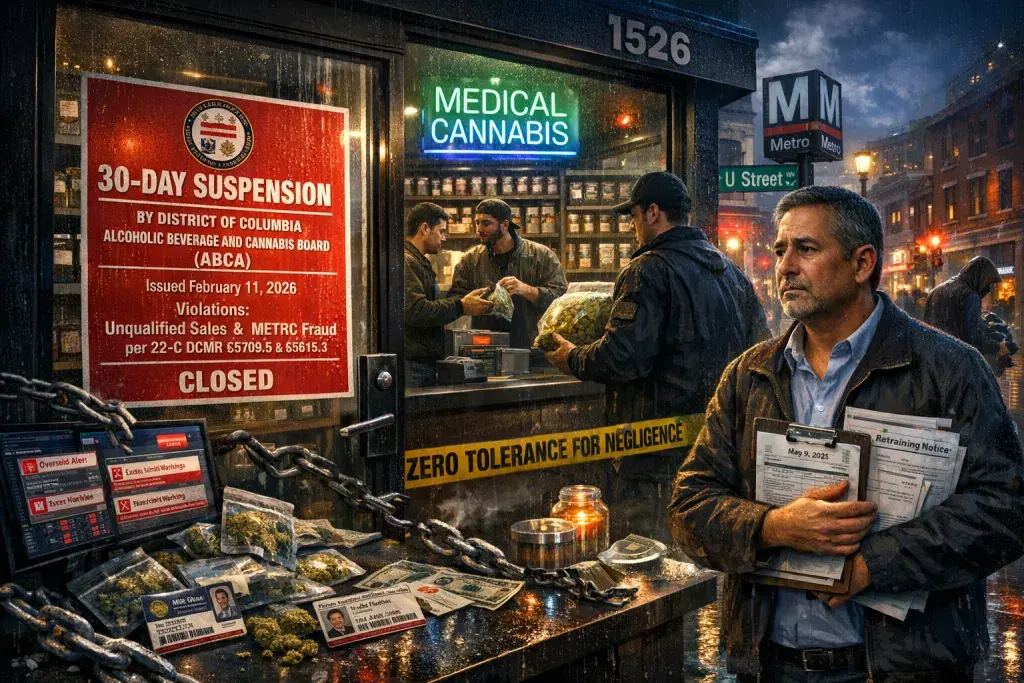
The District of Columbia Alcoholic Beverage and Cannabis Board has imposed a 30-day suspension on KLM, LLC, operating as Doobie District on U Street, for dispensing medical cannabis to unqualified buyers and falsifying records in the METRC seed-to-sale system. Issued February 11, 2026, this ruling underscores the critical need for strict compliance in DC's medical cannabis program to protect public health and prevent diversion to illicit markets.
Undercover Probe Uncovers Serious Violations
An ABCA investigation, triggered May 9, 2025, by tips of improper sales, revealed Doobie District at 1526 U Street, NW, sold medical cannabis to undercover agents without verifying patient or caregiver status. Staff skipped ID checks, and packages bore labels with an employee's name and ID number—not the buyers'.
- Two controlled buys confirmed sales of licensed cultivator product to non-patients.
- The employee's METRC account showed purchases exceeding DC's 8-ounce, 30-day limit.
- Two other patient accounts were oversold using the same credentials.
These lapses violated 22-C DCMR § 5709.5 (dispensing to non-qualified individuals) and § 5615.3 (false METRC entries), eroding the integrity of tracking systems designed to monitor cannabis from seed to sale.
Licensee's Response and Board's Rationale
Owner Peter Murillo admitted the facts, terminated implicated staff, retrained others, and introduced personal oversight like weekly sales tracking. Despite these steps, the Board stressed licensee responsibility for supervision, considering but rejecting revocation due to potential unaware ownership.
The 30-day medical cannabis license suspension begins immediately, with mandatory ABCA-approved training for owners within 60 days. Non-compliance risks reimposition, signaling zero tolerance for negligence.
Implications for DC's Medical Cannabis Landscape
DC's medical program, legalized in 2010, relies on METRC to curb black market diversion—a national issue where untracked cannabis fuels 70-80% of U.S. illegal trade, per federal estimates. Such violations heighten risks of contaminated products reaching recreational users or minors, undermining public safety and patient trust.
This case highlights broader challenges: rapid market growth strains verification protocols, with ABCA overseeing 100+ licensees amid rising demand. Stricter enforcement could deter lax practices, fostering a safer ecosystem as DC eyes recreational expansion. For consumers, it reinforces verifying credentials at dispensaries to access legitimate medical relief.