The highest number on the shelf moves product. That's the economic reality driving how most legal dispensaries organize their menus, train their budtenders, and price their flower inventory. But a growing body of research, field expertise, and regulatory attention is pointing to a serious problem: THC percentage is a poor proxy for product quality, consumer experience, or even actual potency - and the industry's dependence on it is shaping retail behavior in ways that may be actively working against both operators and consumers.
Understanding why requires a look at how dispensary operations actually function on the floor. Point-of-sale systems sort SKUs by attribute fields that operators configure. Wholesale menus from distributors and brands lead with potency. Many states' seed-to-sale tracking systems - like METRC, which powers compliance reporting across dozens of regulated markets - require potency data from a certificate of analysis (COA) on every batch. Operators building on a Metrc-compliant POS for Michigan or any other state know that COA data flows into their inventory records automatically, which means potency is one of the most visible, consistently surfaced data fields in any dispensary's retail stack. That visibility has a side effect: it trains operators, budtenders, and eventually shoppers to treat THC percentage as the primary value signal, even when better signals exist.
The problem runs deeper than merchandising habits. Guy Rocourt - a 25-year cannabis industry veteran and founder of brands including Papa & Barkley and Clea Midlife - describes the fixation on potency as "a remnant of prohibition that continues to hold the industry back." His comparison is useful here. Alcohol retail doesn't organize its floor by ABV. Specialty coffee doesn't sort beans by caffeine content. Both are mature, regulated consumer categories where experience, origin, flavor, and brand trust drive purchasing decisions. Cannabis, Rocourt argues, hasn't made that transition - and the physical design of many dispensaries reflects it, positioning stores as destinations for potency rather than craft or wellness.
The Label Problem: When the Number Isn't Real
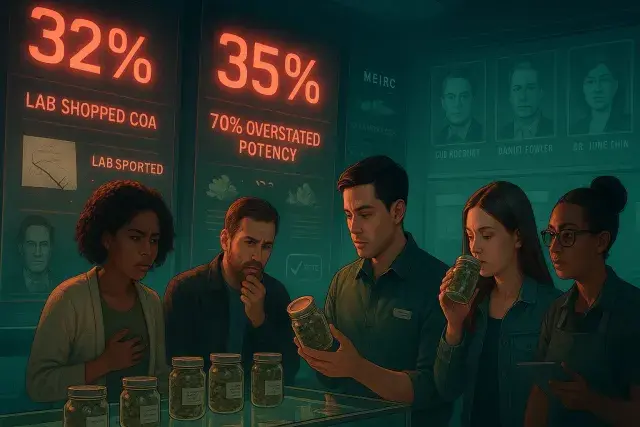
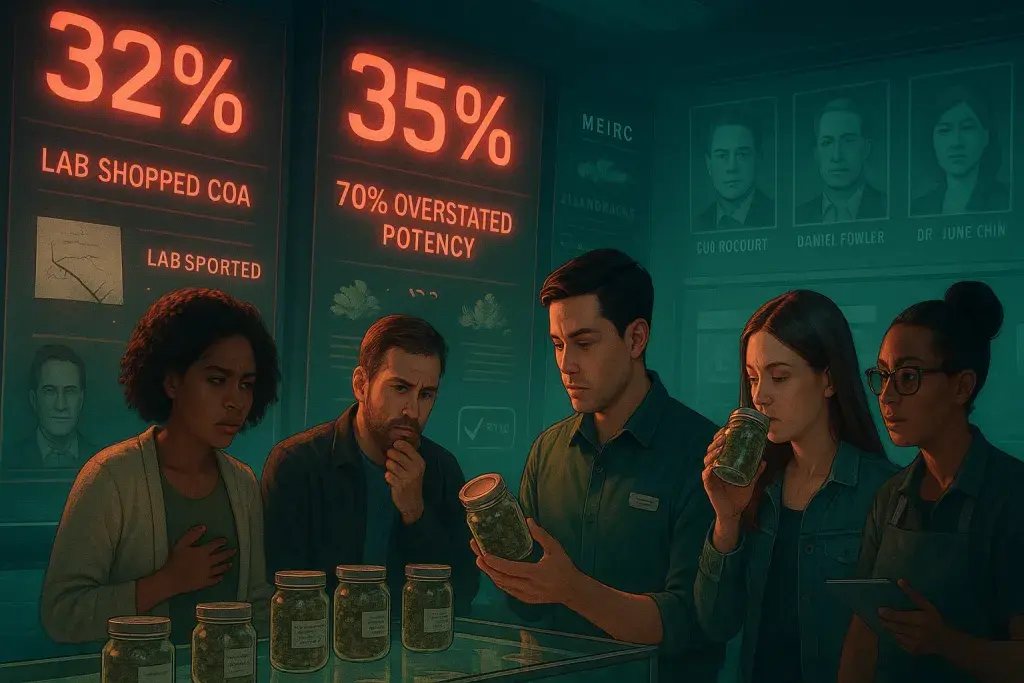
There's an uncomfortable structural issue underneath the potency conversation: the THC number on a compliant package may not accurately reflect what's inside. A peer-reviewed 2023 study published in PLOS ONE tested flower purchased from licensed Colorado dispensaries using independent equipment and found that roughly 70% of samples measured at least 15% lower in THC than their labels claimed. Some tested at half the advertised potency. A 2025 study in Scientific Reports - covering recreational flower across California, Oregon, and Colorado - found that more than 70% of products fell outside an acceptable accuracy threshold for labeled THC content.
The mechanism isn't mysterious. Industry insiders have described it for years: brands and cultivators submit samples to whichever licensed testing facility tends to return the highest numbers. Since potency directly influences wholesale pricing and shelf positioning, the incentive to lab shop is built into the market's economics. It's a compliance gap that state regulators have been slow to close, in part because testing standards - sampling methodology, acceptable variance, inter-lab calibration - vary considerably across state regulatory frameworks. The result is a retail environment where operators are required to display potency data that may be systematically inflated, and where shoppers are making purchasing decisions based on numbers that independent science has repeatedly found unreliable.
Genetics Draw a Hard Ceiling Most Labels Ignore
Even if every lab operated with perfect accuracy, chasing 30%-plus THC on a dispensary menu would still narrow a shopper's options in ways most budtenders aren't equipped to explain. Daniel Fowler, a PhD molecular biologist and Chief Science Officer at S3 Genetics, puts it plainly: from a genetics standpoint, only a narrow range of strain types can realistically hit those numbers. Landraces, heirloom varieties, and many strains associated with the peak of craft cannabis culture in earlier decades simply aren't genetically capable of reaching high-twenties THC - regardless of how optimized the cultivation environment is. That isn't a failure of farming. It's biology.
What this means operationally is that dispensary menus filtered by high THC thresholds are, by definition, menus with compressed genetic diversity. The strains responsible for some of cannabis's most distinctive aromatic and sensory profiles - the ones driving terpene complexity that connoisseur consumers and medical patients increasingly ask about - get buried under the potency sort. Fowler's practical advice for consumers cuts against how most POS menus are built: let aroma guide the choice, ideally by smelling a sample before committing to a prepacked unit. That's sound guidance, but it puts strain on budtenders and in-store sampling protocols that many operators haven't designed around.
What Operators and Brands Should Take From This
Dr. June Chin, D.O., Chief Medical Officer of the New York State Office of Cannabis Management, frames the consumer-side risk clearly: higher THC does not mean more effective. The right product, she argues, is the one that produces a desired outcome at the lowest necessary amount - a harm-reduction framing that runs directly counter to how most dispensary floor sets are organized and how many budtenders are trained to upsell.
For operators, the business implication is worth taking seriously. If independent testing consistently shows that high-potency labels are frequently inaccurate, and if medical and scientific experts agree that THC percentage is a poor predictor of consumer experience, then a retail strategy built entirely around potency as a value signal is commercially fragile. It depends on a number that may not be real, selling an experience it may not deliver. As state regulators continue to examine lab testing integrity - and some have begun tightening inter-laboratory variance standards and blind-sample audit programs - the liability exposure for retailers relying on inflated COA data as a primary merchandising tool is real, not hypothetical.
The more durable retail strategy is one that trains budtenders to consult on terpene profiles, onset preferences, consumption format, and intended effect - the same attributes that drive loyalty in any mature consumer category. Potency belongs on the label and in the compliance record. It doesn't need to be the headline on the menu board.